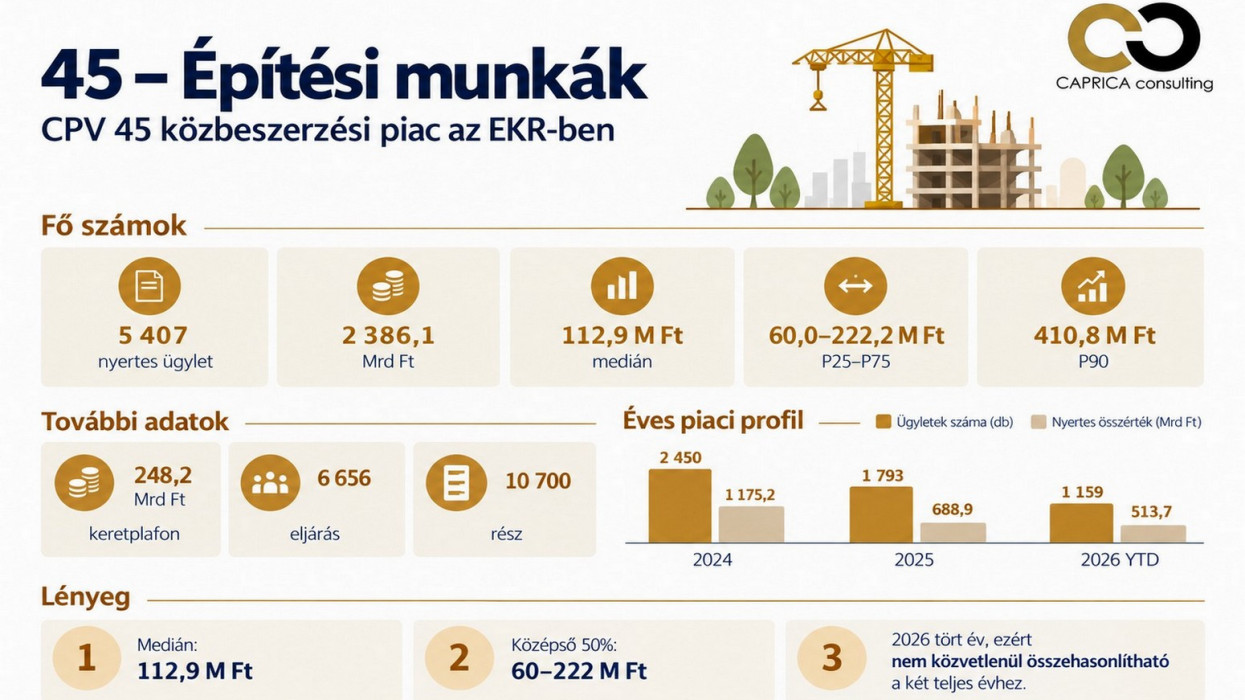
Az építési közbeszerzésekről könnyen a legnagyobb beruházások jutnak eszünkbe, pedig az EKR adatai ennél jóval tagoltabb piacot mutatnak. A CPV 45 - Építési munkák kategóriában 2024 és 2025 teljes éve, valamint 2026. augusztus 7-ig több mint 5 400 elemezhető nyertes ügylet szerepelt a vizsgált mintában. Ezek együttes nyertes értéke mintegy 2 386 milliárd forint volt.
A számok azonban önmagukban csak részben írják le a piacot. Legalább ilyen fontos, hogy mekkora egy tipikus nyertes ügylet, milyen széles értéksávban koncentrálódik a beszerzések többsége, illetve hogyan alakult az EKR-ben megfigyelt piac az egyes években. Az alábbi adatok ezekhez adnak támpontot.
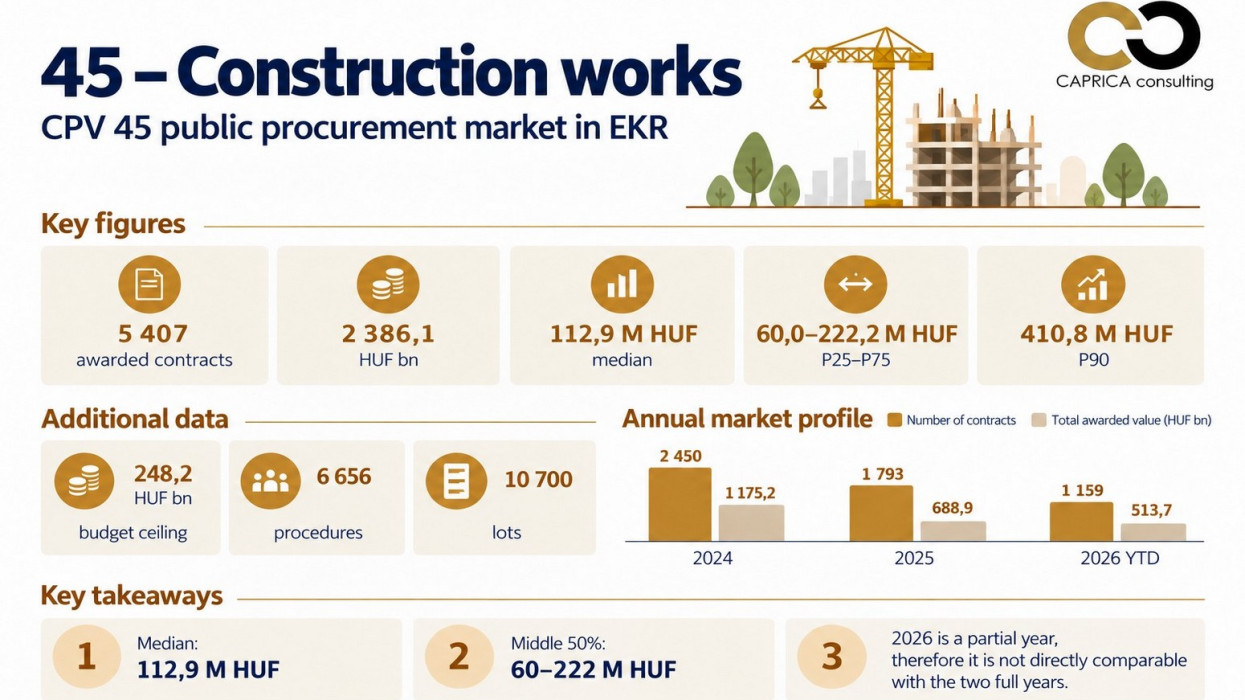
When we think of public procurement for construction works, the largest investment projects may come to mind first. However, EKR data reveal a much more segmented market. In the CPV 45 - Construction Works category, the analysed sample included more than 5,400 awarded contracts across the full years of 2024 and 2025, as well as the period up to 7 August 2026. Their combined awarded value amounted to approximately HUF 2,386 billion.
However, the figures alone provide only a partial picture of the market. It is equally important to understand the size of a typical awarded contract, the value range in which most procurements are concentrated, and how the market observed in the EKR developed from year to year. The following data provide useful insights into these questions.
A GINOP Plusz-2.1.4-25 pályázat második szakasza ugyan már lezárult, a konstrukció azonban továbbra is tartogat változásokat. 2026. augusztus 1-jétől magasabb béregységköltségek léptek életbe, ami a már megvalósítás alatt álló projektek elszámolását is érdemben érintheti.
Although the second stage of the GINOP Plusz-2.1.4-25 call has already closed, the scheme continues to bring changes. As of 1 August 2026, higher wage unit costs have come into effect, which may also have a significant impact on the financial settlement of projects already under implementation.
A pályázati felhívásokban rendszeresen találkozhatunk a csekély összegű, vagyis de minimis támogatással. Bár ez csak egynek tűnhet a különböző támogatási jogcímek közül, egy új projekt tervezésekor komoly jelentősége lehet annak, hogy a vállalkozás rendelkezik-e még elegendő szabad de minimis kerettel.
Grant calls frequently refer to de minimis aid, also known as small amounts of aid. Although it may appear to be just one of several aid categories, when planning a new project it can be crucial to determine whether the undertaking still has sufficient available de minimis capacity.
A Demján Sándor Tőkeprogram indulásakor komoly érdeklődést váltott ki a hazai vállalkozások körében: a konstrukció célja az volt, hogy tőkefinanszírozással segítse a fejlődni, beruházni és kapacitást bővíteni kívánó kkv-kat. Most azonban az MFB felülvizsgálta a program befektetési stratégiáját, és ennek eredményeként a korábbi keretek is módosulnak.
When the Demján Sándor Equity Programme was launched, it attracted considerable interest among Hungarian businesses. The scheme was designed to support SMEs seeking to grow, invest and expand their capacities through equity financing. However, the Hungarian Development Bank (MFB) has now reviewed the programme’s investment strategy, resulting in changes to its original framework.
A támogatási projektek esetében kiemelten fontos, hogy a Kedvezményezett a Támogatói Okiratban foglalt feltételeket teljesítse, a támogatást szabályszerűen használja fel, és a projekt adminisztrációját megfelelően vezesse.
In the case of grant-funded projects, it is particularly important that the Beneficiary complies with the conditions set out in the Grant Award Document, uses the grant lawfully, and maintains proper project administration.
A hazai kis- és középvállalkozások számára kulcsfontosságú finanszírozási lehetőség új szintre lépett: jelentősen bővült a Demján Sándor Tőkeprogram keretösszege. A kormány döntése értelmében az eredeti 100 milliárd forintos keret immár 150 milliárd forintra emelkedik, reagálva a piaci szereplők kiemelkedő érdeklődésére.
A key financing opportunity for Hungarian small and medium-sized enterprises has reached a new level: the funding framework of the Demján Sándor Capital Program has been significantly increased. Under a government decision, the original HUF 100 billion allocation has now been raised to HUF 150 billion, in response to the outstanding interest from market participants.
Sok pályázatnál ösztönösen abból indulunk ki, hogy a projekthez kapcsolódó személyi jellegű ráfordítást a munkaszerződés szerinti (tényleges) bér alapján tervezzük és számoljuk el.
For many grants, we naturally assume that personnel-related project costs should be planned and claimed based on employees’ actual salaries as set out in their employment contracts.
Van egy fejlesztésed, ami már túl van az ötlet fázison, sőt működik is, de a piacra lépéshez még hiányzik az utolsó, legköltségesebb lépés? Ez a pályázat pont erre ad esélyt: arra, hogy a prototípusból valódi, bevezethető termék vagy szolgáltatás legyen.
Do you have a development that’s already beyond the idea stage, and it even works ,but you’re still missing the final, most cost-intensive step before entering the market? This call is designed exactly for that: to help turn your prototype into a real, launch-ready product or service.